Anubis 8.0
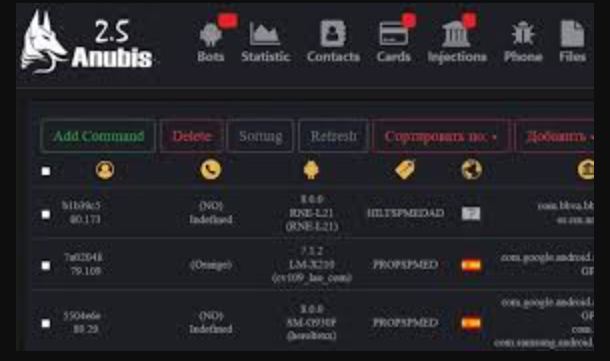
The mobile malware landscape has become increasingly dangerous with the emergence of sophisticated banking trojans that target financial applications across multiple platforms. Among these threats, a particularly advanced strain has evolved through multiple iterations to become one of the most pervasive mobile banking malware families in circulation. Anubis 8.0 exemplifies the growing trend of cross-platform financial threats that combine traditional banking trojan capabilities with advanced ransomware features, creating a dual-threat payload that can both steal credentials and lock devices. Its modular architecture and frequent updates make it especially difficult to detect and analyze, posing significant risks to both individual users and financial institutions.
Download Link 1
Download Link 2
Download Link 3
Download Link 4
This malware is a feature-rich banking trojan primarily targeting Android devices, though newer versions have expanded to other platforms. It operates as a malicious overlay application designed to steal banking credentials, credit card information, and sensitive personal data. Typically distributed through fake app stores, malicious advertisements, and smishing campaigns, it is commonly used in financial fraud operations, identity theft, and as a precursor to ransomware attacks. The Anubis 8.0 is a significant evolution from previous iterations, incorporating new evasion techniques and expanded targeting capabilities that make it particularly dangerous in the current threat landscape.
Key Features of Anubis 8.0
| Feature | Description |
| Overlay Attacks | Displays fake login screens over legitimate banking apps |
| Keylogging | Captures all keyboard input including passwords and PINs |
| SMS Interception | Reads and sends SMS messages to bypass 2FA |
| Remote Control | Allows attackers to take control of infected devices |
| Ransomware Module | Encrypts device files and demands payment |
| Anti-Detection | Uses multiple techniques to evade mobile security solutions |
| Accessibility Abuse | Exploits Android accessibility services for persistent access |
| Target List | Contains over 500 financial applications worldwide |
| C2 Communication | Uses encrypted channels with fallback mechanisms |
How Anubis 8.0 Works
Infection Vector
The malware typically spreads through:
- Fake Application Packages: Disguised as legitimate apps or utilities
- Smishing Campaigns: Malicious links sent via SMS messages
- Third-Party Stores: Distributed through unofficial app marketplaces
- Malvertising: Drive-by downloads from compromised ad networks
Upon installation, the malware:
- Requests extensive permissions (accessibility services, SMS, overlay)
- Hides its icon from the app drawer to prevent removal
- Connects to command and control (C2) servers for configuration
Core Malicious Functionality
- Overlay Attack Mechanism:
- Monitors for launches of targeted banking apps
- Displays identical-looking fake login screens
- Captures entered credentials and transmits to C2
- SMS Fraud Capabilities:
- Intercepts incoming SMS messages (including 2FA codes)
- Can send premium-rate SMS messages without user knowledge
- Block security-related SMS alerts from banks
- Remote Access Features:
- Allows attackers to remotely control the device
- Can initiate USSD commands for financial fraud
- Enables real-time screen viewing and interaction
- Ransomware Component:
- Encrypts user files with strong cryptography
- Displays ransom demands threatening data loss
- Can lock the device completely until payment
Evasion and Persistence Techniques
- Code Obfuscation: Uses advanced packing and encryption
- Dynamic Loading: Downloads malicious modules after installation
- Anti-Emulation Checks: Detects and behaves differently in analysis environments
- Update Mechanism: Can receive new configurations and target lists
- Persistence: Maintains access through accessibility service abuse
Command and Control Infrastructure
The malware uses a resilient C2 network with:
- Domain Generation Algorithm (DGA): Creates numerous potential C2 domains
- Tor-based Fallback: Can connect through Tor hidden services
- Cloud Hosting Abuse: Leverages legitimate cloud platforms for C2 traffic
Peer-to-Peer Options: Can communicate through other infected devices