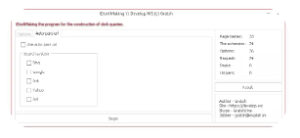
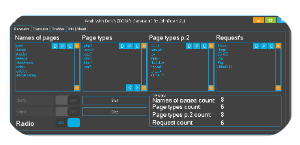
Blood DORKER 2025
In the evolving landscape of cyber threats, tools like Blood DORKER 2025 have gained notoriety for their role in modern cyberattacks. This software, in particular, exemplifies the growing sophistication of malicious tools. Often, it is used in targeted attacks to exploit vulnerabilities, exfiltrate data, or deliver additional payloads. Moreover, its modular design and evasion techniques make it a persistent threat, especially in attacks against web applications and network infrastructure. Therefore, cybersecurity professionals must understand its mechanisms to detect and mitigate its impact effectively.
Download Link 1
Download Link 2
Download Link 3
Download Link 4
Blood DORKER 2025 software is a malicious toolkit primarily designed for reconnaissance, exploitation, and post-exploitation activities. Specifically, it leverages advanced search engine queries, known as “dorking,” to identify vulnerable web applications, which are then targeted for further exploitation. As a result, typical uses include data theft, credential harvesting, and deploying secondary malware such as ransomware or remote access trojans (RATs). Furthermore, its flexibility allows attackers to tailor attacks to the target environment, making it even more dangerous.
Key Features
| Feature | Description |
| Automated Dorking | Scans search engines for vulnerable web applications using predefined queries. |
| Exploit Delivery | Deploys payloads through identified vulnerabilities, such as SQL injection, cross-site scripting, and remote code execution. |
| Payload Customization | Supports modular payloads, including info-stealers and backdoors. |
| Evasion Techniques | Uses obfuscation, encryption, and traffic masking to avoid detection. |
| C2 Integration | Communicates with Command and Control (C2) servers for remote operations. |
| Persistence Mechanisms | Establishes long-term access via registry modifications or scheduled tasks. |
How the Software Works
Reconnaissance (Dorking Phase)
The software begins its operation with an automated reconnaissance phase, commonly known as “Google Dorking.” During this stage, it issues sophisticated search queries to public search engines. These queries are carefully designed to uncover websites with known vulnerabilities—such as exposed admin panels, misconfigured databases, or outdated software components. Once the results are retrieved, they are parsed to pinpoint high-value targets for further exploitation.
Exploitation
After identifying a vulnerable system, the software proceeds to the exploitation phase. At this point, it deploys specific exploit modules tailored to the detected weaknesses. Common techniques include:
SQL Injection (SQLi): This method takes advantage of improperly sanitized input fields to either extract or manipulate database content.
Remote Code Execution (RCE): RCE vulnerabilities are used to execute arbitrary commands on the target server, often giving the attacker full control.
Cross-Site Scripting (XSS): Through XSS, the attacker injects malicious scripts into web pages viewed by other users, enabling session hijacking or redirection to malicious sites.
Command and Control (C2)
Following a successful exploitation, the malware establishes a connection to a Command and Control (C2) server. This channel allows the attacker to issue remote commands, exfiltrate sensitive data, or update the malware itself. To avoid detection, communication is usually encrypted and obfuscated, often leveraging HTTPS or DNS tunneling to mimic legitimate traffic patterns.
Persistence
To ensure continued access, the malware implements various persistence techniques. These may include:
Modifying registry keys or system startup folders to launch on reboot.
Creating scheduled tasks that periodically reactivate the malware.
Exploiting legitimate system processes, a tactic known as living off the land, which makes the malware harder to detect by security tools.
![Work With Dorks [DORK’s Generator]-Dork Generator](https://blackhatus.com/wp-content/uploads/2025/07/Work-With-Dorks-DORKs-Generator-Dork-Generator-1.png)