CERBERUS V4 Cracked
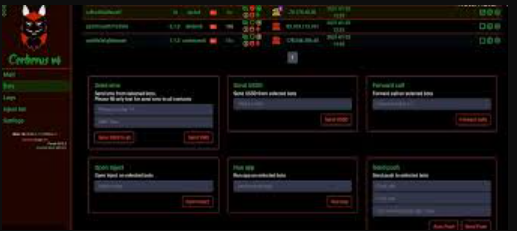
The Android banking malware landscape has become increasingly dangerous with the emergence of CERBERUS V4 Cracked, a sophisticated variant that demonstrates how cybercriminals are adapting commercial malware tools for widespread attacks. This advanced banking trojan has been actively used in campaigns targeting financial institutions and their customers worldwide, showcasing its ability to bypass modern security measures on mobile devices. CERBERUS V4 Cracked represents a significant evolution in mobile financial threats, combining traditional credential stealing with advanced remote access capabilities. Its availability in cracked form has lowered the barrier to entry for cybercriminals, making sophisticated banking fraud accessible to a wider range of attackers.
Download Link 1
Download Link 2
Download Link 3
Download Link 4
What is the CERBERUS V4
This software is a powerful Android banking trojan that functions as both an information stealer and a remote access tool. It primarily targets online banking applications, cryptocurrency wallets, and payment platforms through sophisticated overlay attacks and keylogging techniques. The malware is typically distributed through malicious apps disguised as legitimate banking tools, utility applications, or game mods on third-party app stores. Once installed, it can bypass two-factor authentication, intercept SMS messages, and even take full control of infected devices. Cybercriminals frequently use this malware in coordinated attacks against both individual bank customers and financial institutions, making it one of the most dangerous mobile banking threats in circulation.
Key Features
| Feature | Description |
| Overlay Attacks | Displays fake login screens over legitimate banking apps |
| SMS Interception | Reads incoming messages, including 2FA codes |
| Keylogging | Records all keystrokes entered on the device |
| Remote Control | Allows attackers to manipulate the device through VNC |
| Screen Capture | Takes screenshots of banking app activities |
| Notification Hijacking | Intercepts and hides banking app notifications |
| Contact List Theft | Harvest phone contacts for further phishing attacks |
| Self-Protection | Uses obfuscation and anti-analysis techniques |
How the CERBERUS V4 Works
The malware operates through a carefully orchestrated infection chain designed to maximize financial theft while maintaining stealth:
1. Delivery and Installation
The malware typically spreads through:
- Fake banking apps.
- Trojanized versions.
- Phishing links.
Once installed, it:
- Requests extensive permissions (SMS, Accessibility Services, overlay).
- Disguises its icon or hides it completely from the app drawer.
- Checks for security apps or analysis environments.
2. Persistence Mechanisms
To maintain access, the malware:
- Registers itself as a device administrator.
- Uses Android’s Accessibility Services to prevent uninstallation.
- Creates persistent background services that auto-restart.
3. Banking Fraud Techniques
When banking apps are detected, the malware:
Overlay Attack
- Detects when target banking apps are opened.
- Displays a perfect replica of the login screen.
- Captures entered credentials when victims “log in.”
SMS Interception
- Monitors incoming messages for transaction authorization codes.
- Automatically forwards them to attacker-controlled numbers.
- Can delete messages to hide the theft.
Real-Time Fraud
- Uses remote access to initiate transactions.
- Bypasses 2FA by inputting intercepted codes.
- Manipulates banking apps through screen control.
4. Data Exfiltration
Stolen information is transmitted via:
- Encrypted HTTPS to C2 servers.
- Telegram bots for immediate access.
- Backup channels through SMS or email.
5. Advanced Evasion
The malware employs multiple techniques to avoid detection:
- Dynamic code loading.
- Geo-fencing.
- Time-delayed execution.
- Code obfuscation.