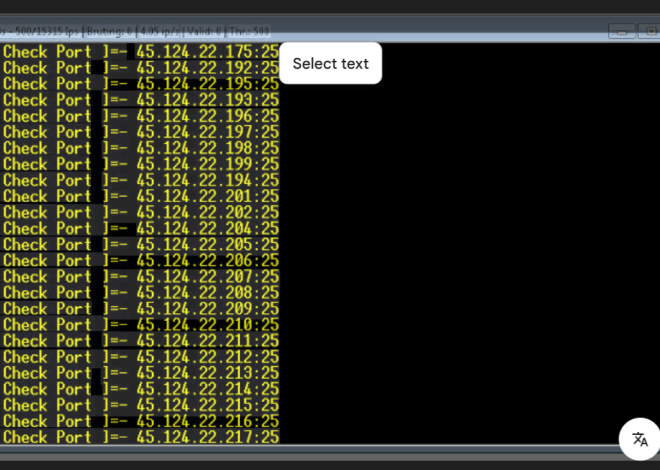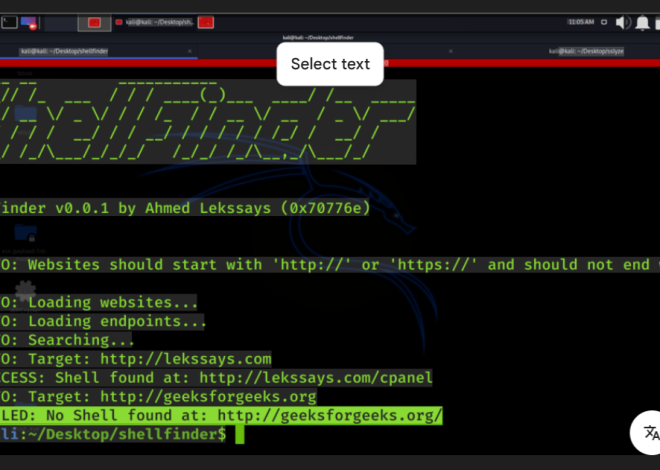
Coinbase Checker and Bruter 2025
As cryptocurrency adoption grows, so do the tools designed to exploit weaknesses in digital asset platforms. Among these, automated credential-testing tools have become a significant threat in 2025, enabling attackers to breach accounts at scale. Coinbase Checker and Bruter tools are frequently used in credential stuffing and brute-force attacks, targeting exchanges, wallets, and financial services. By automating login attempts and bypassing security measures, they allow cybercriminals to hijack accounts, drain funds, and launder stolen assets. Their efficiency and adaptability make them a persistent challenge for cybersecurity professionals.
Download Link 1
Download Link 2
Download Link 3
Download Link 4
Coinbase Checker and Bruter software are designed to automate the testing of login credentials against cryptocurrency exchange platforms, primarily targeting accounts with weak passwords or reused credentials. While penetration testers may use similar tools for security audits, malicious actors deploy them to gain unauthorized access to user accounts. The tool typically integrates credential verification, brute-force capabilities, and session hijacking techniques to bypass security controls like two-factor authentication (2FA). Once access is obtained, attackers can transfer funds, manipulate trades, or pivot to further attacks within the platform.
Key Features
| Feature | Description |
| Credential Stuffing | Tests large volumes of stolen usernames/passwords against login portals. |
| Brute-Force Attack Engine | Systematically guesses passwords using dictionaries or rule-based patterns. |
| Proxy & VPN Support | Route traffic through multiple IPs to evade rate limits and IP bans. |
| 2FA Bypass Techniques | Attempts to circumvent SMS or authenticator-based 2FA via session hijacking. |
| Session Cookie Extraction | Steals active browser sessions to maintain access without re-authentication. |
| Automated Fund Transfer | Executes pre-configured withdrawal scripts upon successful account takeover. |
| Logging & Reporting | Records successful logins, balances, and other target details for later use. |
How Coinbase Checker and Bruter 2025 Works
The software operates in stages, combining credential testing, brute-forcing, and evasion techniques to compromise accounts efficiently. Below is a detailed breakdown of its functionality:
- Credential Harvesting & Preparation – The tool ingests lists of email-password pairs, often sourced from previous data breaches. These credentials are formatted and filtered to match the target platform’s login requirements.
- Automated Login Attempts – Using a headless browser or API-based requests, the software submits credentials to the exchange’s login page. It checks for successful responses (e.g., session tokens, account dashboards) to identify valid logins.
- Brute-Force & Dictionary Attacks – If credentials are not pre-verified, the tool systematically tests password variations, leveraging common patterns, dictionary words, and rule-based mutations (e.g., appending numbers or symbols).
- Evasion Techniques – To avoid detection, the software rotates IP addresses via proxies or VPNs, mimics human-like delays between attempts, and spoofs browser fingerprints to evade bot detection systems.
- 2FA & Session Hijacking – If an account has 2FA enabled, the tool may attempt phishing, SIM-swapping (via external methods), or session cookie theft to bypass the additional security layer. Stolen cookies allow persistent access without needing the second factor.
- Payload Execution (Malicious Use Case) – Once inside an account, attackers can deploy automated scripts to transfer funds to external wallets, manipulate trades, or install malware for long-term access. Some variants even use smart contract exploits to drain DeFi-linked accounts.
By automating these steps, the software enables attackers to scale their operations, targeting thousands of accounts with minimal manual intervention. Its modular design allows customization for different exchanges, making it a versatile and dangerous tool in the hands of cybercriminals. Security teams combat such threats with rate limiting, behavioral analysis, and multi-factor authentication enhancements—but as defenses improve, so do the evasion tactics of these tools.