Crypto Balance Checker Explained: Features & Mechanics
A crypto balance checker is a blockchain interrogation tool that fetches and displays the current state of any public wallet address. It serves as a window into the transparent yet complex world of distributed ledgers.
What is a Crypto Balance Checker? It functions as a lightweight client that interacts with blockchain networks to read account states. Users input public addresses; the tool returns balances without ever requiring or accessing private keys. This design ensures safety while leveraging the public nature of blockchains.
Download Link 1
Download Link 2
Download Link 3
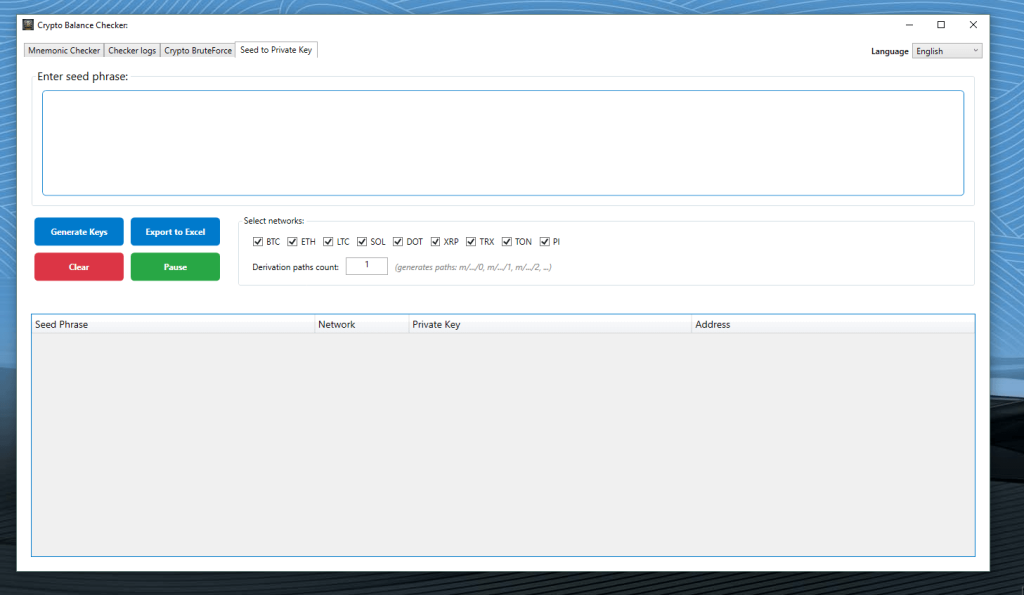
Support for diverse architectures is crucial: Bitcoin (BTC) uses the UTXO model, Ethereum (ETH) and compatible chains (Polygon, Arbitrum, Base, Avalanche, BNB) rely on account-based EVM, Solana (SOL) employs a unique account model with program-derived addresses, while Polkadot (DOT), Tron (TRX), and Ripple (XRP) have their own consensus and data structures.
Key Features in Depth Leading 2026 crypto balance checkers include:
- Comprehensive Multi-Chain Integration: Native handling of Bitcoin (BTC), Ethereum (ETH), BNB Chain (BNB), Litecoin (LTC), Solana (SOL), Polygon (MATIC), Avalanche (AVAX), Polkadot (DOT), Arbitrum (ARB), Base (BASE), Tron (TRX), and Ripple (XRP).
- Granular Asset Display: Native coins, fungible tokens, and sometimes NFT metadata with accurate valuations.
- Full Transaction Audit Trail: Detailed logs including block height, fees, and confirmations.
- Batch & Watchlist Functionality: Monitor multiple addresses with refresh intervals.
- Advanced Analytics: Basic PnL estimation, large transaction flagging, and balance change history.
- User Experience Enhancements: Dark mode, mobile optimization, and one-click chain switching.
How It Works: Technical Breakdown The workflow involves several backend steps:
- User Input Layer: Address validation (format checking per chain, e.g., base58 for BTC/SOL vs. hex for ETH).
- API/ RPC Layer: The checker connects to public RPC endpoints or aggregator services. For Ethereum-compatible chains, it calls eth_getBalance and token contract methods like balanceOf().
- Data Aggregation: For multi-token support, it scans known token contracts or uses indexing services that maintain off-chain databases of holdings.
- Price Oracle Integration: Real-time feeds (e.g., from Chainlink or centralized exchanges) convert crypto amounts to fiat.
- Rendering & Caching: Results are cached briefly for performance while ensuring data freshness through periodic polling or websocket subscriptions for live updates.
On Solana, the process queries account info and token accounts. On Ripple (XRP), it checks the XRP Ledger state. The tool must handle differences in finality times and data models across chains.
Security considerations include rate limiting to avoid abuse, HTTPS enforcement, and open-source transparency in some projects. Accuracy depends on reliable node connections and up-to-date indexing.
In 2026, crypto balance checkers continue evolving with better cross-chain aggregation and user-friendly abstractions, making complex blockchain data accessible to everyone.