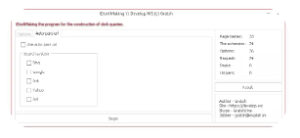
Shell FINDER V-7
Firstly, the Shell FINDER V-7 has emerged as a significant tool in modern cyberattacks, frequently leveraged by threat actors to identify and exploit vulnerabilities in target systems. Not only does it automate reconnaissance and payload delivery, but it also proves particularly dangerous in the hands of malicious actors due to its efficiency. Recently, campaigns utilizing this software have conducted targeted attacks, primarily focusing on credential harvesting, lateral movement, and persistent access. Moreover, its modular design allows adaptation to various attack vectors, thereby making it a versatile weapon in the evolving cyber threat landscape.
What Is Shell FINDER V-7?
Essentially, this software functions as a reconnaissance and exploitation tool, allowing attackers to scan networks, identify vulnerabilities, and deploy malicious payloads. It is commonly used in phishing campaigns, supply chain attacks, and post-exploitation activities. Additionally, its modular architecture permits customization, such as integrating keyloggers, ransomware, or remote access trojans (RATs). While it has legitimate uses in penetration testing, its misuse in cybercrime has raised significant concerns among security professionals.
Download Link 1
Download Link 2
Download Link 3
Download Link 4
Key Features of Shell FINDER V-7
| Feature | Description |
|---|---|
| Automated Scanning | Actively identifies open ports, services, and vulnerabilities in target systems. |
| Payload Customization | Flexibly supports modular payloads, including malware, scripts, or exploits. |
| Stealth Mechanisms | Effectively uses obfuscation and anti-detection techniques to evade security tools. |
| Lateral Movement | Seamlessly spreads across networks by exploiting weak credentials or misconfigurations. |
| Persistence | Reliably establishes long-term access via registry modifications or scheduled tasks. |
How Shell FINDER V-7 Operates
Reconnaissance and Initial Compromise
Initially, the software conducts reconnaissance by scanning target systems for open ports, outdated software, or misconfigurations. Typically, it employs techniques like banner grabbing and vulnerability probing to gather intelligence. Once a weakness is detected, it then exploits it using known exploits or brute-force attacks to gain access.
Payload Deployment and Execution
After breaching a system, the tool deploys customized payloads based on the attacker’s goals. These payloads often include:
- Droppers – Lightweight scripts that subsequently download additional malware.
- Backdoors – Persistent access mechanisms, such as reverse shells.
- Credential Harvesters – Tools that actively extract passwords or session tokens.
Evasion and Command Control
To avoid detection, Shell FINDER V-7 employs multiple evasion techniques:
- Obfuscation – First, it encrypts or packs code to bypass signature-based detection.
- Living-Off-the-Land (Lotl) – Next, it exploits legitimate tools (e.g., PowerShell, WMI) to execute malicious commands.
- Staged Execution – Finally, it delivers payloads in phases, using callbacks to retrieve additional modules stealthily.
Once executed, the payload establishes communication with a command-and-control (C2) server, thereby enabling remote control. From there, attackers escalate privileges, move laterally, or exfiltrate data depending on their objectives.
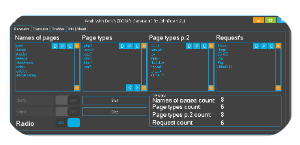
![Work With Dorks [DORK’s Generator]-Dork Generator](https://blackhatus.com/wp-content/uploads/2025/07/Work-With-Dorks-DORKs-Generator-Dork-Generator-1.png)