SMTP Cracker 2.1
In the ever-evolving landscape of cyber threats, SMTP Cracker 2.1 (Simple Mail Transfer Protocol) exploitation tools have emerged as a critical weapon for attackers targeting email infrastructure. The 2025 iteration of these tools represents a significant leap in sophistication, combining traditional email server probing with advanced evasion techniques and automation capabilities. These tools play a pivotal role in modern cyberattacks by enabling threat actors to identify vulnerable email servers, harvest valid email addresses, and bypass security measures, creating the foundation for large-scale spam campaigns, phishing operations, and credential-stuffing attacks. Their ability to rapidly test thousands of email combinations while evading detection makes them particularly dangerous to organizations of all sizes, as compromised email systems can serve as gateways for more devastating breaches.
Download Link 1
Download Link 2
Download Link 3
Download Link 4
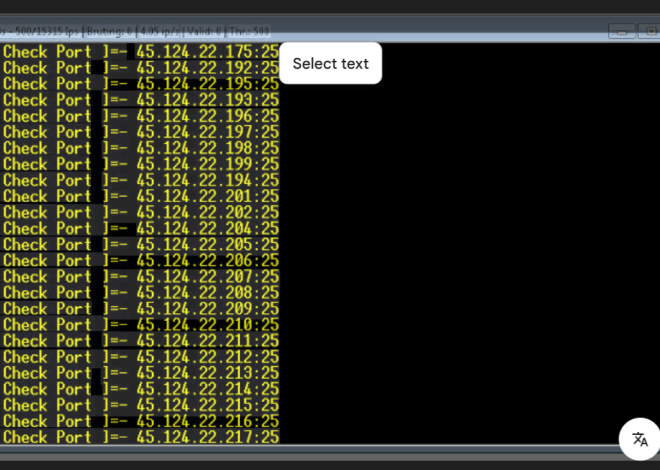
This specialized software is designed to systematically test and exploit SMTP servers through a combination of brute-force techniques and protocol manipulation. It functions as an automated SMTP testing suite capable of verifying email addresses, identifying server vulnerabilities, and bypassing common security controls. While network administrators might use similar tools for legitimate security testing, malicious actors typically deploy this software to build targeted email lists for spam operations or to identify weakly secured servers that can be hijacked for malicious email relaying. The tool’s effectiveness stems from its deep understanding of SMTP protocols and its ability to adapt to various server configurations and security measures.

Key Features of SMTP Cracker 2.1
| Feature | Description |
| Multi-threaded SMTP Engine | Processes 500+ simultaneous connection attempts across multiple servers |
| Advanced Protocol Analysis | Tests for vulnerabilities in SMTP implementations (open relays, etc.) |
| Email Validation Suite | Accurately verifies email existence through multiple techniques |
| Proxy Chain Integration | Routes traffic through multiple proxy layers to evade IP blocking |
| CAPTCHA Bypass Module | Integrates with AI-based CAPTCHA solving services |
| Server Fingerprinting | Identifies exact SMTP server software and version for targeted exploits |
| Custom Scripting Engine | Allows creation of server-specific attack patterns |
| Detailed Vulnerability Reporting | Exports found vulnerabilities with exploitation guidelines |
How SMTP Cracker 2.1 Works
The attack process follows a sophisticated, multi-stage approach:
- Target Acquisition and Configuration
- Accepts input as individual email addresses, domain lists, or IP ranges
- For domains, automatically queries DNS MX records to locate SMTP servers
- Loads server-specific configuration templates when available
- Normalizes input data and applies transformation rules (common email patterns)
- SMTP Server Handshake
- Initiates connection using protocol-compliant EHLO/HELO commands
- Analyzes server response to determine:
- Supported SMTP extensions
- Security features in place
- Potential vulnerabilities
- Adjusts attack approach based on server characteristics
- Email Verification Process
- Executes carefully crafted SMTP dialogues:
- MAIL FROM with spoofed sender addresses
- RCPT TO with target email addresses
- Interprets server responses using advanced pattern matching:
- 250 OK indicates likely valid address
- 550 codes suggest invalid address
- Ambiguous responses trigger secondary verification methods
- Employs fallback techniques when standard methods fail:
- EXPN and VRFY command testing
- Recipient callout verification
- Timing analysis for differential responses
- Executes carefully crafted SMTP dialogues:
- Server Exploitation Techniques
- Tests for open relay configuration:
- Attempts to send messages through server
- Verifies unauthorized message acceptance
- Checks for vulnerability to SMTP injection:
- Tests header and content manipulation
- Attempts command injection in mail data
- Identifies version-specific exploits:
- CVE-tested vulnerability checks
- Known configuration weaknesses
- Tests for open relay configuration:
- Evasion and Anti-Detection
- Dynamic traffic shaping:
- Randomized delay patterns (200-5000ms)
- Naturalistic command sequencing
- Advanced obfuscation:
- TLS fingerprint spoofing
- Legitimate client simulation
- IP rotation system:
- Residential proxy networks
- Cloud hosting providers
- TOR exit nodes (for certain operations)
- Dynamic traffic shaping:
- Payload Delivery and Post-Exploitation
- For verified email addresses:
- Formats for phishing list integration
- Tags with metadata (server type, validation method)
- For compromised servers:
- Deploys persistent backdoors
- Configures unauthorized mail relays
- Installs rootkits where possible
- Generates comprehensive reports:
- Valid email lists
- Server vulnerability assessments
- Recommended exploit paths
- For verified email addresses: