Black Binder 2025
Cybercriminals are increasingly relying on sophisticated binding tools to conceal malicious payloads within seemingly legitimate files, creating a significant challenge for modern cybersecurity defenses. These advanced Black Binder 2025 applications have become a critical component in the malware delivery chain, enabling attackers to bypass traditional security measures by exploiting the trust users place in common file types. The 2025 generation of these tools demonstrates alarming improvements in evasion techniques, allowing threat actors to distribute ransomware, spyware, and remote access trojans through files that appear completely normal to both users and security software. Their widespread availability in underground markets has lowered the barrier to entry for cybercrime, contributing to the growing volume of successful attacks against both enterprises and individuals.
Download Link 1
Download Link 2
Download Link 3
Download Link 4
Black Binder 2025 software is an advanced file binder designed to seamlessly merge malicious executables with legitimate files while maintaining the original file’s functionality. It provides attackers with a powerful tool to create trojanized versions of common document formats, applications, and media files that can bypass standard security checks. The toolkit is typically used in phishing campaigns, malware distribution, and targeted attacks, where the deception of appearing as a legitimate file is crucial. Its sophisticated algorithms ensure that bound files retain their original appearance and core functionality while secretly executing embedded malicious code in the background, making it particularly effective against both technical and non-technical targets.
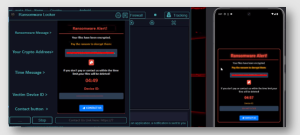
Key Features
| Feature | Description |
| Multi-Format Binding | Supports EXE, DLL, PDF, DOCX, XLSX, JPG, and MP4 files |
| Stealth Mode | Preserves original file properties and digital signatures |
| Polymorphic Engine | Generates unique file variants to evade signature detection |
| Anti-Sandbox | Detects and bypasses virtualized environments |
| Payload Encryption | AES-256 encryption with custom obfuscation |
| Execution Triggers | Configurable activation methods (file open, specific date/time, etc.) |
| Rootkit Integration | Optional kernel-level hiding capabilities |
How Black Binder 2025 Works
The binding process employs a sophisticated multi-stage approach to ensure successful payload delivery:
File Analysis & Preparation
- Parses the legitimate host file to understand its structure
- Identifies optimal injection points that won’t affect functionality
- Analyzes and preserves original metadata and certificates
- Generates a custom stub for payload integration
Payload Processing
- Compresses and encrypts the malicious executable
- Splits the payload into smaller chunks for stealthier embedding
- Applies polymorphic techniques to vary the code structure
- Generates a custom decryption routine for runtime unpacking
File Reconstruction
- Rebuilds the file structure to incorporate both components
- Maintains valid file headers and checksums
- Preserves visual appearance and core functionality
- Implements integrity checks to avoid corruption flags
Execution Mechanism
- Uses various triggering methods:
- Document macros or embedded scripts
- File property handlers
- Media file codec vulnerabilities
- Custom file extension associations
- Implements memory-only execution when possible
- Establishes persistence through:
- Startup folder entries
- Scheduled tasks
- Windows service creation