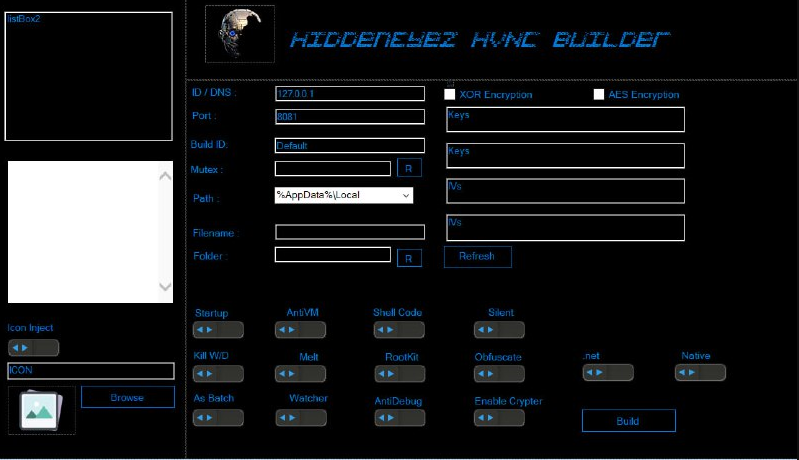
HIDDENZ HVNC TOOLS 2025
The cybersecurity landscape faces an escalating threat from advanced remote access tools designed to operate undetected on compromised systems. Among these, HIDDENZ HVNC TOOLS 2025 represents a sophisticated evolution in stealth malware technology, enabling attackers to maintain persistent, invisible access to victim machines. This toolkit leverages Hidden Virtual Network Computing (HVNC) technology to bypass traditional security measures and user awareness, making it particularly dangerous for both enterprise networks and individual users. The 2025 iteration demonstrates enhanced evasion capabilities and modular functionality, allowing cybercriminals to conduct everything from credential theft to ransomware deployment while remaining completely undetected. Its growing popularity in underground forums highlights a concerning trend toward weaponized stealth technologies in modern cyberattacks.
Download Link 1
Download Link 2
Download Link 3
Download Link 4
This software is a comprehensive stealth toolkit centered around HVNC technology, providing attackers with invisible remote control over infected systems. Unlike conventional remote access tools, it operates at a deeper system level, creating hidden virtual desktops that evade both user detection and security software monitoring. The toolkit is typically distributed through phishing campaigns, malicious downloads, or as a payload delivered by other malware. Cybercriminals primarily use it for long-term espionage, financial fraud, and as a precursor to more destructive attacks like ransomware deployment. The modular architecture allows attackers to customize functionality, enabling selective deployment of features like keylogging, screen capture, or credential harvesting based on their objectives.
Key Features
| Feature | Description |
| Hidden Virtual Desktop | Creates invisible remote sessions undetectable to users |
| Process Ghosting | Executes malicious operations without visible processes |
| Credential Theft | Harvests passwords from browsers, email clients, and VPNs |
| Session Hijacking | Steals authentication tokens for persistent access |
| Screen Capture | Records or streams desktop activity silently |
| Fileless Execution | Operates in memory to avoid disk-based detection |
| Persistence | Maintains access via registry modifications and WMI events |
| Network Evasion | Uses DNS tunneling and encrypted channels for C2 traffic |
| Anti-Forensics | Clears logs and modifies timestamps to hide activity |
How HIDDENZ HVNC TOOLS 2025 Works
1. Delivery & Initial Infection
The toolkit employs multiple sophisticated infection vectors:
- Spear Phishing: Malicious documents with exploit code
- Supply Chain Attacks: Compromised software updates
- Exploit Kits: Targeting unpatched browser vulnerabilities
- Malicious Advertisements: Drive-by downloads from compromised sites
2. Stealth Installation Process
Upon execution, the malware performs a multi-stage deployment:
- Environment Reconnaissance:
- Detects virtual machines, sandboxes, and analysis tools
- Identifies security products and monitoring solutions
- Kernel-Level Persistence:
- Installs via Windows Management Instrumentation (WMI) event subscriptions
- Creates deeply hidden registry entries in system hive locations
- Memory-Resident Operation:
- Uses process hollowing to inject into svchost.exe or other trusted processes
- Implements reflective DLL loading to avoid file system artifacts
3. HVNC Core Functionality
The hidden desktop capability operates through:
- Virtual Desktop Creation:
- Establishes a completely separate desktop environment
- Does not appear in task manager or desktop switcher
- Session Isolation:
- Runs in a different Windows station than the user’s visible desktop
- Bypasses screen locking and session tracking
- Input/Output Redirection:
- Captures keystrokes and mouse movements invisibly
- Displays attacker activity only in the hidden session
4. Malicious Operations
Once established, the toolkit can perform numerous attacks:
Credential Harvesting
- Dumps LSASS memory for Windows credentials
- Intercepts browser password databases
- Captures VPN and RDP authentication details
Surveillance Activities
- Records audio through microphone hijacking
- Captures webcam footage via direct device access
- Logs clipboard contents for sensitive data
Network Propagation
- Spreads laterally using stolen credentials
- Exploits Windows administrative shares (C
- ,ADMIN
- ,ADMIN)
- Targets vulnerable SMB services for network traversal